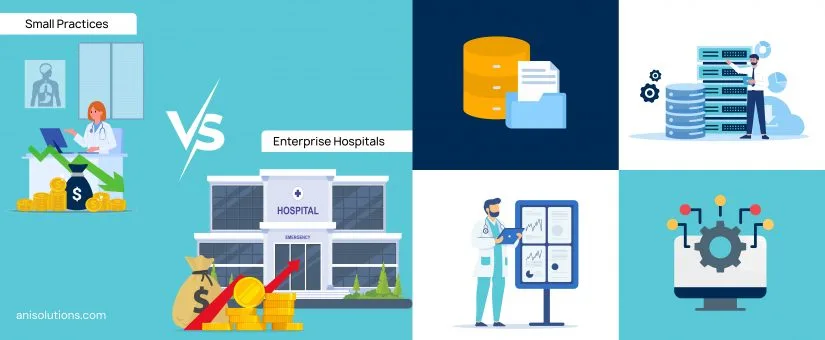
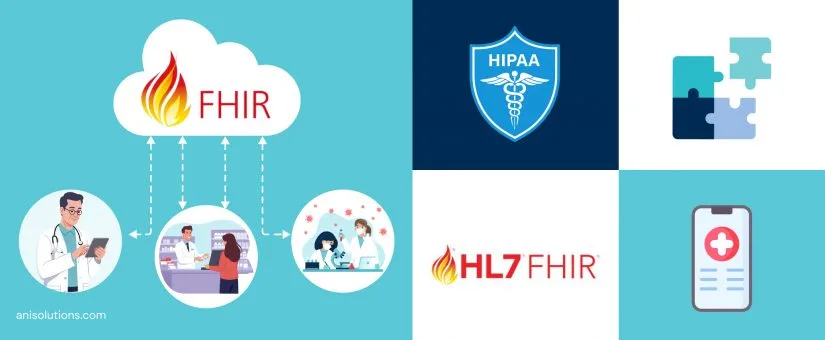
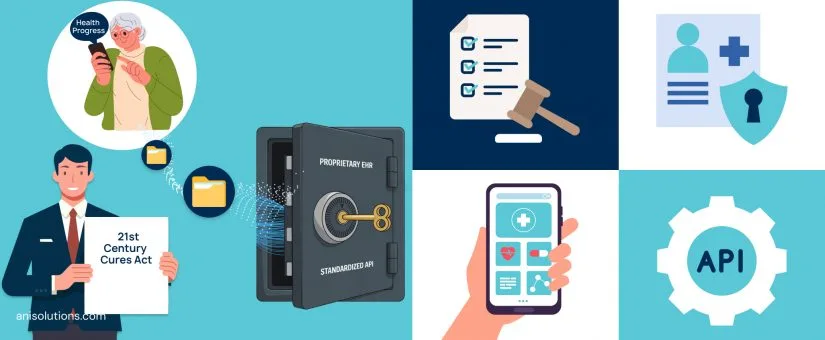
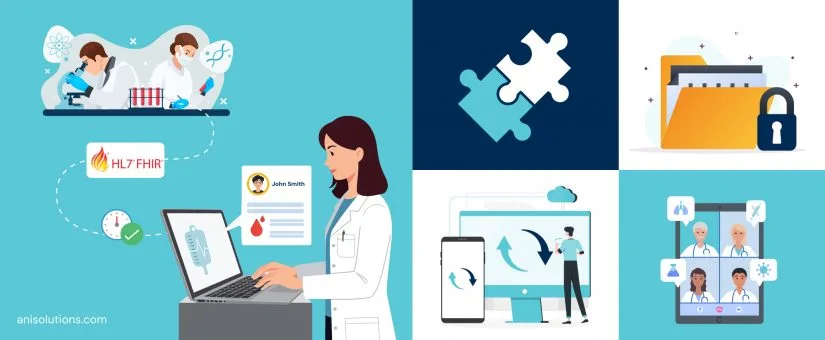
When you go to Google or Safari and type: What are the EHR integration costs? You might get multiple answers, with each one giving you a different amount of the costs. And these differences can be confusing if you don’t understand how the EHR integration cost breakdown works and changes for different practices. For instance, […]
If you are thinking about integrating your EHR system, then even before researching the integration stack, the first step is EHR integration partner selection. And this is where you need to clearly separate vague promises from the true capabilities of the EHR vendor. However, if you only ask Can you integrate healthcare systems with our […]
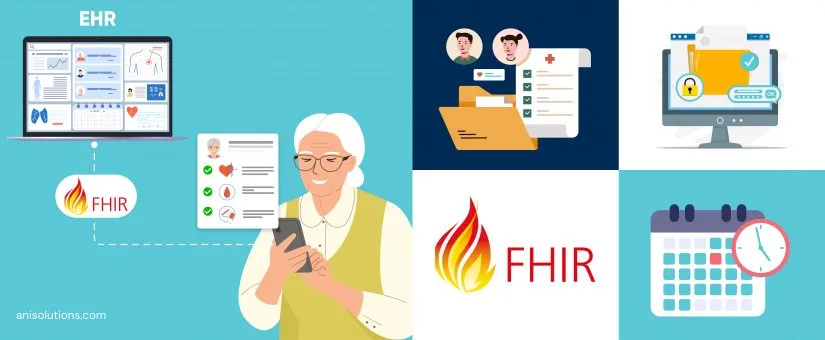
How many of your patients use patient portals or are aware that they can view their data online? Well, if we go by a recent report on the Journal of Medical Internet Research (JMIR), nearly 62% accessed online portals, with 90% of them using it to view their test results. So, we can say that […]
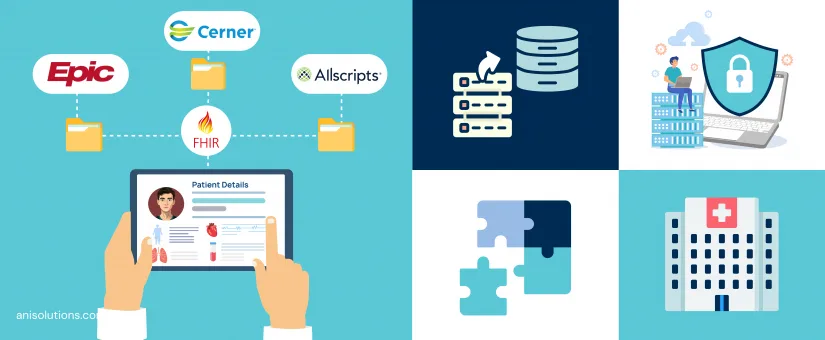
One of our clients was using three EHRs: Epic, Cerner, and Allscripts to manage different tasks. Epic was used for managing patient records and exchanging data, Cerner for billing, and Allscripts for specialty practices. While the intent was to utilize the best in all systems to make work efficient, all this only led to fragmented […]
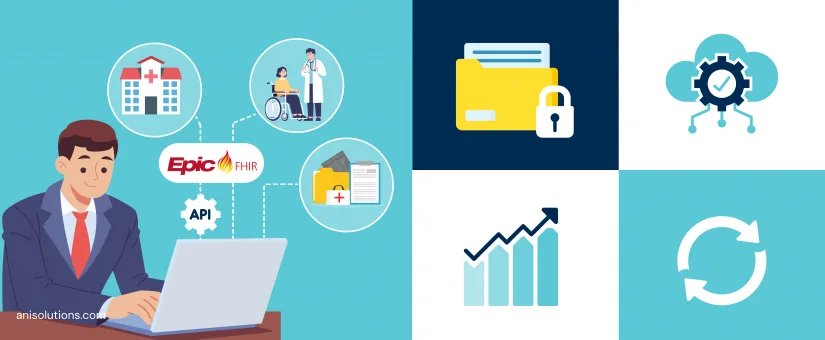
In the EHR vendor market, Epic dominates nearly 30% of the market, and multiple large US hospitals operate on Epic systems, making integration with the Epic system essential. And Epic FHIR API integration plays a crucial role in building interoperability, EHR workflow automation, and data-driven decision-making. Moreover, the healthcare industry is shifting towards a consistent […]
Interoperability is no longer an option, but a necessity. However, achieving this interoperability is nearly impossible without using FHIR API integration. This is why APIs are no longer just a trend shift but are increasingly becoming the backbone of healthcare organizations. In fact, a report by the Office of the National Coordinator for Health Information […]
In 2026, interoperability has strongly shifted from just a technical requirement to a compliance requirement. With the enforcement of the 21st Century Cures Act in September of 2025, this changed how hospitals accessed, shared, and integrated patient data. Most importantly, especially for healthcare CTOs, it has almost rewritten or, more precisely, solidified the importance of […]
As healthcare organizations expand across multiple locations, one challenge becomes unavoidable—how do you ensure every clinic stays connected, consistent, and scalable without breaking workflows? Most EHR systems claim to support multi-location use, but in reality, they struggle when scaled. Data becomes fragmented, workflows differ across clinics, and real-time coordination breaks down. That’s why, even when […]