

Patient experience
Trusted By 500+ U.S. Healthcare Providers
Reduce No-Shows with Custom Healthcare Digital Front Door Software
We build secure, patient-first digital front doors and patient engagement solutions that streamline the end-to-end patient journey through intelligent automation and 24/7 access—helping providers reduce appointment drop-offs.
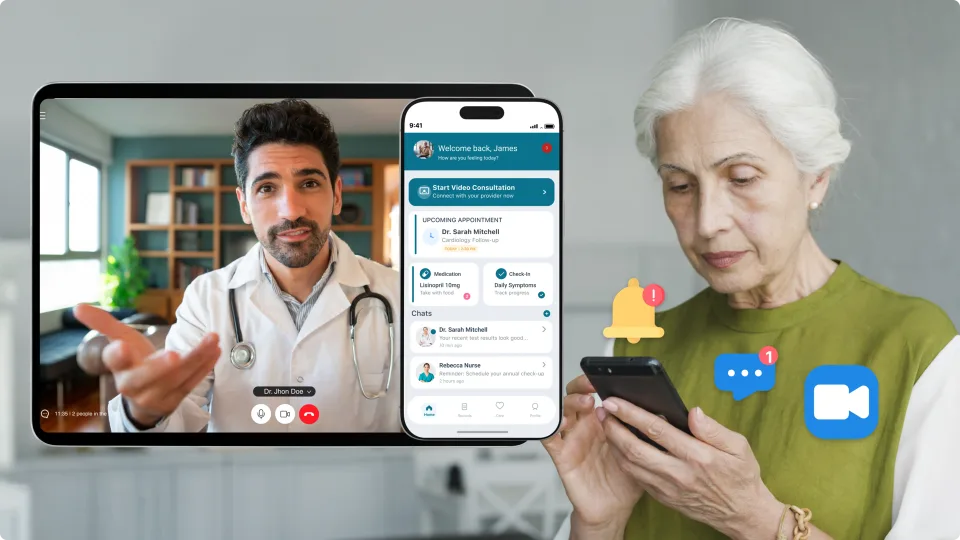
Omnichannel Patient Engagement Solutions That Keep Patients Connected
Engage patients across their preferred channels, text, email, portal, and mobile, while keeping communication consistent, timely, and compliant throughout the care journey.
Digital Intake & Self-Scheduling
Enable patients to book appointments, complete digital intake, and receive confirmations through a seamless digital front door, reducing drop-offs and improving access across teams.
- Digital intake forms and self-scheduling workflows
- Automated patient outreach and appointment confirmations
- Omnichannel communication via SMS, email, and patient portals
- Real-time availability and scheduling visibility
Omnichannel Patient Engagement
Keep patients connected before and after visits with omnichannel engagement tools that deliver personalized messages, virtual care, education, and adaptive reminders based on patient response patterns.
- Omnichannel patient engagement across SMS, email, portal, and mobile
- HIPAA-compliant two-way patient messaging and notifications
- Telehealth integration for virtual visits and remote follow-ups
- Personalized education, surveys, and post-visit feedback collection
Digital Patient Check-In & Verification
Streamline patient arrivals with contactless check-ins using automated intake validation, eligibility verification, and self-service workflows to reduce errors, ease front-desk workload, and improve patient flow.
- Mobile and kiosk-based patient check-in for on-site visits
- Digital identity, eligibility, and intake verification
- Patient-reported outcomes and screening tools captured digitally
- Automated data capture synced across care teams and systems
- Reduced front-desk dependency through self-service workflows
Ongoing Patient Engagement & Self-Service Access
Use real-time engagement data and self-service tools to understand patient behavior, improve follow-through, and support long-term care outcomes.
- Patient portals for ongoing access to health records and care plans
- Secure access to lab results, prescriptions, and visit summaries
- Digital requests for prescription refills and follow-up services
- Remote patient monitoring with real-time health insights
- Continuous engagement to support adherence and long-term care
Digital Payments & Patient Engagement Analytics
Unify digital payments and engagement analytics to better understand patient behavior, payment patterns, and care participation across your digital front door.
- Secure online payment options with digital receipts and statements
- Payment history tracking and patient billing visibility
- Engagement and experience analytics across access and follow-up workflows
- Practice-level insights into patient behavior and retention patterns
- Reporting dashboards to support operational and financial decisions
EHR-Integrated Patient Engagement Platforms
Connect your digital front door with EHRs and third-party healthcare systems to ensure seamless data exchange, coordinated workflows, and consistent patient experiences across the care continuum.
- Seamless integration with EHR and practice management systems
- Automated data exchange for scheduling, intake, and engagement workflows
- Interoperability with hospital CRMs, patient engagement tools, and care platforms
- Real-time data synchronization to support care coordination
- Scalable integrations designed for hospitals and multi-specialty clinics
Real Results from Digital Front Doors Built to Perform
See how providers and healthcare organizations reduced no-shows, improved patient engagement, and streamlined access with custom digital front door solutions.
Lakeside Family Health
Primary Care Network
Challenge:
High appointment no-shows, manual intake processes, and inconsistent patient communication were impacting clinic efficiency and patient experience across locations.
Results:
- Digital self-scheduling and intake workflows
- Automated appointment reminders and follow-ups
- Unified patient communication across channels
Clinic Locations
Appointment No-Shows
-35%
Front-Desk Workload
-40%
"We were losing time and revenue to missed appointments and manual intake. A&I helped us build a digital front door that made scheduling and communication easier for patients and staff alike. The reduction in no-shows was noticeable within weeks. "
Mark Reynolds
Operations Director, Lakeside Family Health
SilverOak Multi-Specialty Clinic
Multi-Specialty Outpatient Practice
Challenge:
Patient access and engagement varied by department, leading to fragmented experiences, duplicated outreach, and poor follow-through on care plans.
Results:
- Omnichannel patient engagement across SMS, email, and portal
- Standardized communication workflows across specialties
- Improved patient follow-up and care coordination
Specialties
Patient Response Rates
+45%
Missed Follow-Ups
-30%
"Our biggest issue was consistency. With A&I’s digital front door solution, every department now follows the same engagement workflows. Patients respond faster, and our teams finally have visibility into the full patient journey. "
Angela Morris
Director of Patient Experience, SilverOak Clinic
Horizon Outpatient Care Group
Ambulatory Care Network
Challenge:
Manual check-ins and paper intake slowed patient flow, increased wait times, and placed unnecessary pressure on front-desk staff.
Results:
- Mobile and kiosk-based digital patient check-in
- Digital verification and intake workflows
- Reduced in-clinic congestion and wait times
Providers
Manual Check-In Time
-50%
Average Patient Wait Time
-25%
"Digital check-in transformed our front-desk operations. Patients arrive prepared, staff spend less time on paperwork, and clinic flow is smoother throughout the day. "
Jason Lee
Practice Administrator, Horizon Outpatient Care Group
Summit Care Partners
Regional Healthcare Network
Challenge:
Limited post-visit engagement made it difficult to keep patients connected, thereby affecting follow-ups, education, and participation in long-term care.
Results:
- Patient portals and self-service access to health information
- Automated follow-up reminders and education workflows
- Ongoing engagement beyond in-person visits
Active Patients
50K+
Follow-Up Completion Rate
+38%
Portal Adoption
+32%
"The digital front door helped us stay connected with patients long after the visit. Education, reminders, and follow-ups are now seamless, improving participation across our care programs. "
Dr. Emily Carter
Clinical Operations Lead, Summit Care Partners
Ready to Reduce No-Shows & Improve Patient Engagement?
Explore how a custom digital front door can streamline patient access, communication, and follow-ups across your care network.
Frequently Asked Questions
Q. What is a digital front door in healthcare?
A digital front door in healthcare is a unified entry point that connects patients to care through online scheduling, digital intake, communication, and self-service tools, delivered via healthcare digital front door software designed to improve access, engagement, and experience.
Q. Why do healthcare organizations need a digital front door?
Healthcare organizations need digital front-door solutions to reduce access barriers, streamline patient interactions, and meet rising digital expectations while improving operational efficiency, patient satisfaction, and care continuity across clinical and administrative workflows.
Q. How does a digital front door improve patient access to care?
A digital front door improves patient access by offering 24/7 self-service scheduling, mobile-friendly intake, automated communication, and timely reminders, allowing patients to find care, book appointments, and stay informed without relying on phone calls or office hours.
Q. How does a digital front door differ from a patient portal?
Unlike a patient portal, a digital front door manages the entire patient journey, including discovery, scheduling, intake, communication, and follow-ups, rather than focusing only on post-visit records, messages, and lab results.
Q. What features are commonly included in a digital front door platform?
Digital front door healthcare platform development typically includes digital intake and self-scheduling solutions, AI-powered patient self-service tools, patient engagement analytics and experience insights, automated reminders, payments, and secure integrations with clinical and administrative systems.
Q. How can a digital front door help improve patient engagement?
Through the development of patient engagement platforms, digital front doors support omnichannel patient engagement solutions, automated patient outreach and communication, mobile-first patient engagement for US providers, and personalized reminders that keep patients connected before and after visits.
Q. Can digital front door solutions help reduce appointment no-shows?
Yes, reducing no-shows with digital front door automation is achieved through self-scheduling, automated reminders, real-time confirmations, and proactive follow-ups that address missed appointments early and encourage patients to complete scheduled visits.
Q. How does a digital front door support appointment scheduling and check-in?
A digital front door enables digital intake and self-scheduling solutions that allow patients to book appointments, complete forms, verify eligibility, and check in digitally, reducing front-desk workload and improving clinic flow.
Q. Can a digital front door work with existing healthcare systems?
Yes, modern digital front doors are built as EHR-integrated patient engagement platforms, enabling seamless data exchange with EHRs, practice management systems, billing tools, and third-party applications without disrupting existing workflows.
Q. Are digital front door platforms secure and compliant with healthcare regulations?
Digital front door platforms are designed with security-first architectures, including HIPAA-compliant patient messaging platforms, role-based access controls, encryption, audit logs, and compliance safeguards to protect sensitive patient information.
Q. Who should invest in a digital front door—hospitals, clinics, or specialty practices?
A digital front door for hospitals and multi-specialty clinics is especially valuable for organizations managing high patient volumes, multiple locations, or complex workflows, while smaller practices benefit from improved access, engagement, and operational efficiency.
Q. What should healthcare organizations consider before building a digital front door platform?
Before investing in custom patient engagement software development, organizations should assess workflow complexity, integration requirements, scalability needs, patient demographics, compliance expectations, and long-term goals to ensure the digital front door aligns with care delivery and growth plans.