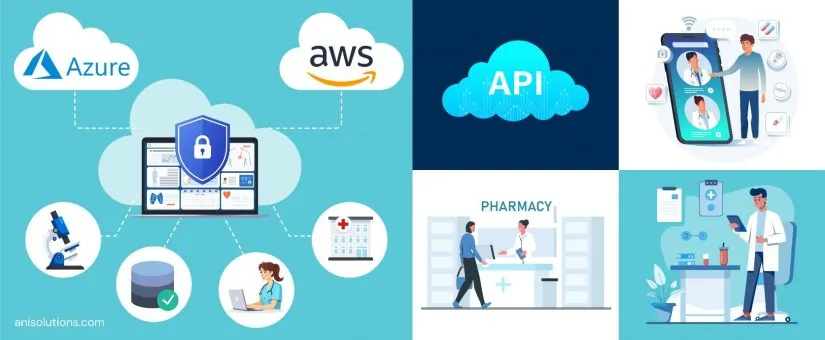
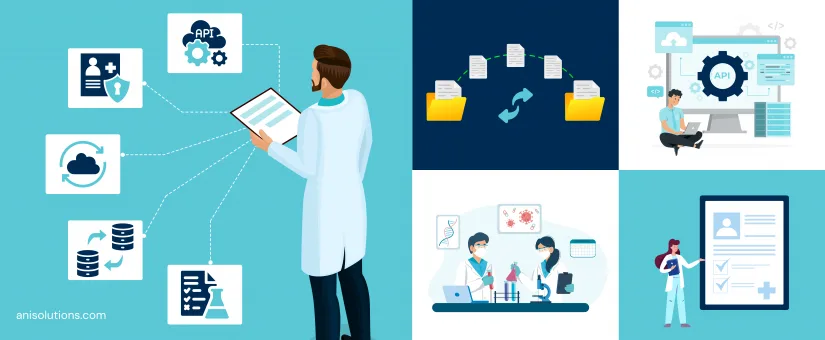
Right now, modern custom EHR and EMR software is more than just a system to store patient records. It has become the central hub for care delivery by connecting clinicians with labs, pharmacies, billing systems, telehealth platforms, and RPM devices. However, this growing ecosystem also increases the data volumes, integration requirements, and the need for […]
When I was researching this topic, I came across an interesting and concerning statistic. A study on the JAMA Network Open found that hacking and IT accounted for 88% of the 732 million healthcare records exposed from 2010 to 2024. This shows that in the last decade, incidents such as ransomware attacks and data breaches […]
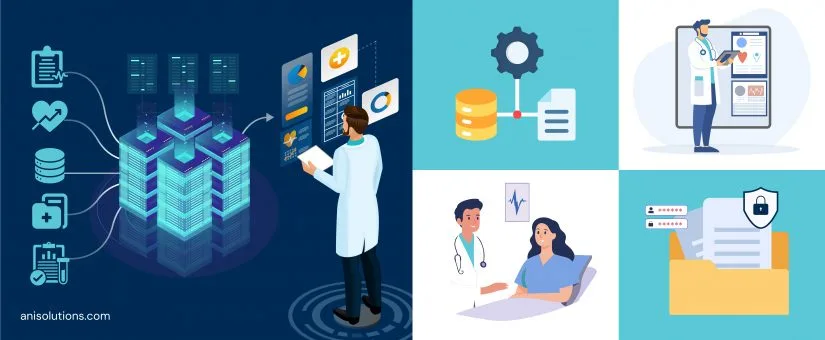
Right now, for healthcare organizations, the biggest issue is not the lack of data, but how to turn it into actionable insights. In fact, as per a report by McKinsey & Company, healthcare generates nearly 30% of the world’s total data volume. Every lab report, patient encounter, imaging study, and telehealth visit generates data points […]
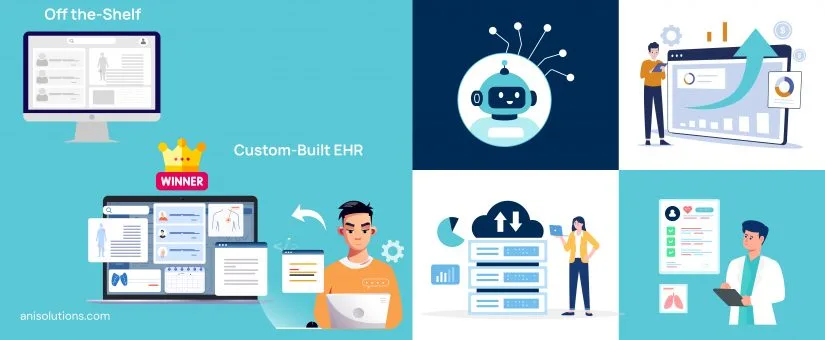
What is the biggest difference between a custom-built EHR vs off-the-shelf EHR? You may think it is cost, customization, or control; however, the true difference is the flexibility and adaptability a custom EHR brings to the table. And this is the reason why many healthcare organizations are shifting towards a custom EHR. Because while off-the-shelf […]
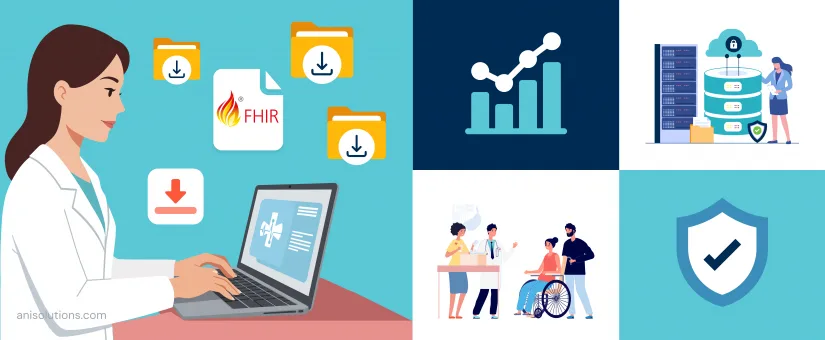
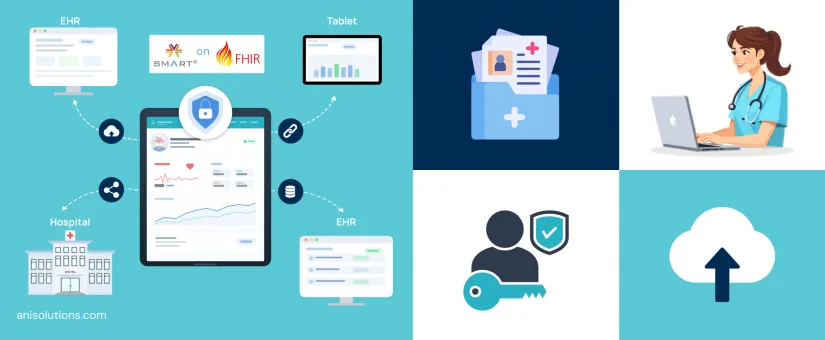
FHIR API adoption has grown significantly, nearly reaching 70%, as per the Office of the National Coordinator for Health IT (ONC). But adoption is not the same as standardization in system integration. Yet, many healthcare organizations assume that the adoption of FHIR APIs means a standardized integration process. Although FHIR was designed to make this […]
Healthcare APIs have made the data exchange much faster and smoother. However, one issue still remains: APIs were not built for large data transfer; they were built for single-patient access. Moreover, the standardized FHIR R4 APIs work well for viewing patient records or connecting clinical apps. But when healthcare organizations try to scale it for […]
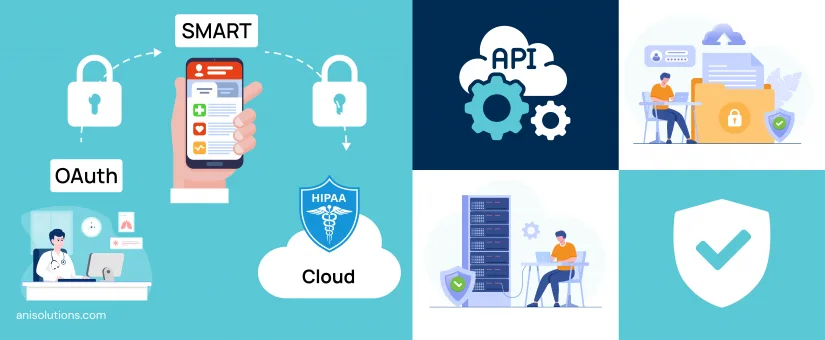
One of the most significant shifts in modern healthcare is moving away from perimeter-based toward identity-based healthcare security. And this shift is driven by the rapid adoption of API-first architecture, seamless data flows, integrations with third-party apps, and cloud-based services. In a perimeter-based system, the security approach was to trust everything inside the system, given […]
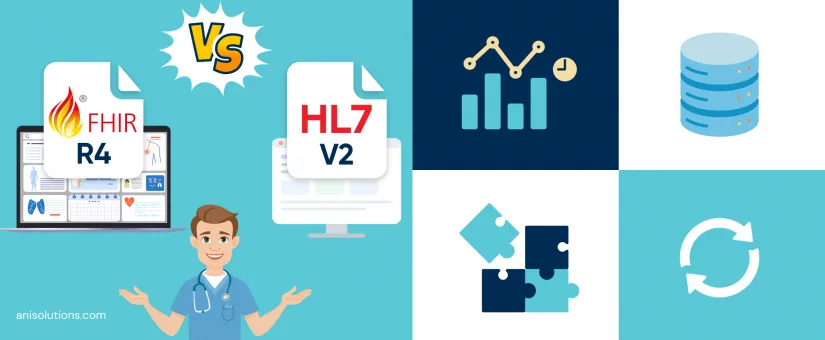
One builds the foundation for data exchange internally, and the other evolves this data exchange to true interoperability. Yet, many assume that HL7 v2 is slowly being replaced by FHIR API standards. Although if you look at nearly 90% of hospitals using APIs for data exchange, it looks like that. But we also need to […]
For decades, healthcare systems functioned on a closed, monolithic architecture. However, this is changing rapidly as the industry is shifting towards a modular, app-based ecosystem. The reason for this is that monolithic architecture limits how providers scale, integrate new technologies, and adapt to evolving regulations. More importantly, healthcare providers depend on what their vendor allows, […]
EHR budgets don’t usually fail because of one big mistake—they fail because of accumulated inefficiencies. Many healthcare organizations invest heavily in custom EHR development, only to realize later that a significant portion of the budget was spent on rebuilding standard features, reworking integrations, or fixing avoidable issues. That’s where waste quietly builds up. This is […]